

Welcome to Trinity!
A guide for those new to Trinity and/or Anglican worship New to TrinityAnglican Service OverviewSundays at Trinity
We gather at 10am at The Refuge Center for Counseling
4317 Long Ln, Franklin, TN 37064.
Dress is whatever is comfortable. Most of us will be in the business casual range.
Enter using the doors on the right side of the courtyard as you are facing the building.
Our services are liturgical but casual. If you are new to Anglicanism, you can view a sample liturgy below.
Children & Families
Children are an important part of the Trinity family, and we value their presence as we gather together.
Children begin the service with us and are dismissed before the homily. They return as we begin the Eucharist together.
Check In
For you first few visits, check in labels are simply written out for your child.
Use the button below to add your family to our check in system.
Questions? Contact us at kids@trinitytn.org
Connect at Trinity
Join us before and after the service for coffee, tea, and hot chocolate!
We gather to learn, eat, and explore. Learn more below.
Our groups are set up to foster deeper connection. Use the button below to join.
Anglican Liturgy
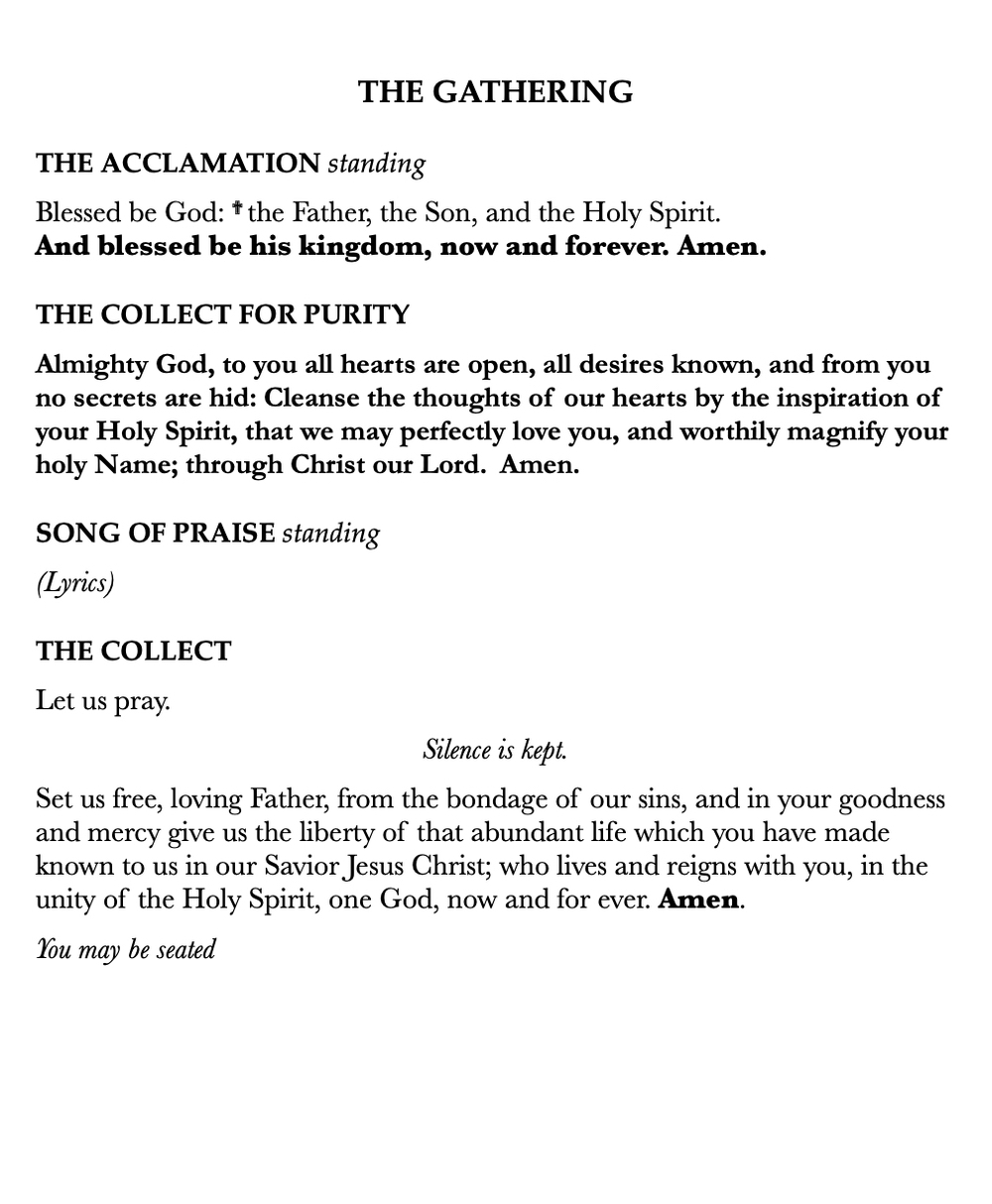
The Gathering
From scattered lives into one people
We arrive as individuals, carrying different weeks, different worries, different joys. The Gathering is the liturgy’s way of drawing us together.
“Liturgy” is derived from the Greek word leitourgia, meaning “the work of the people”. We gather as participants in the beautiful work of our service.
Note – bold portions of the liturgy are to be read by all.
Where you see a subscript cross, you are invited to cross yourself. We do this as a physical act of worship, to remind ourselves of our connection with the three-in-one God.
The Acclamation
The service starts with a short call-and-response, as we begin our journey to the table.
The Collects
The word “collect” (KAHL-lekt) comes from the Latin collecta, meaning gathering. These prayers gather us together.
The Collect of Purity asks God to cleanse and prepare our heats and minds as we enter into worship. This prayer has been prayed at the start of Anglican services since the first English Prayer Book in 1549
The Collect of the Day is drawn from the Scripture readings for each Sunday and traces the unifying theme of the week.
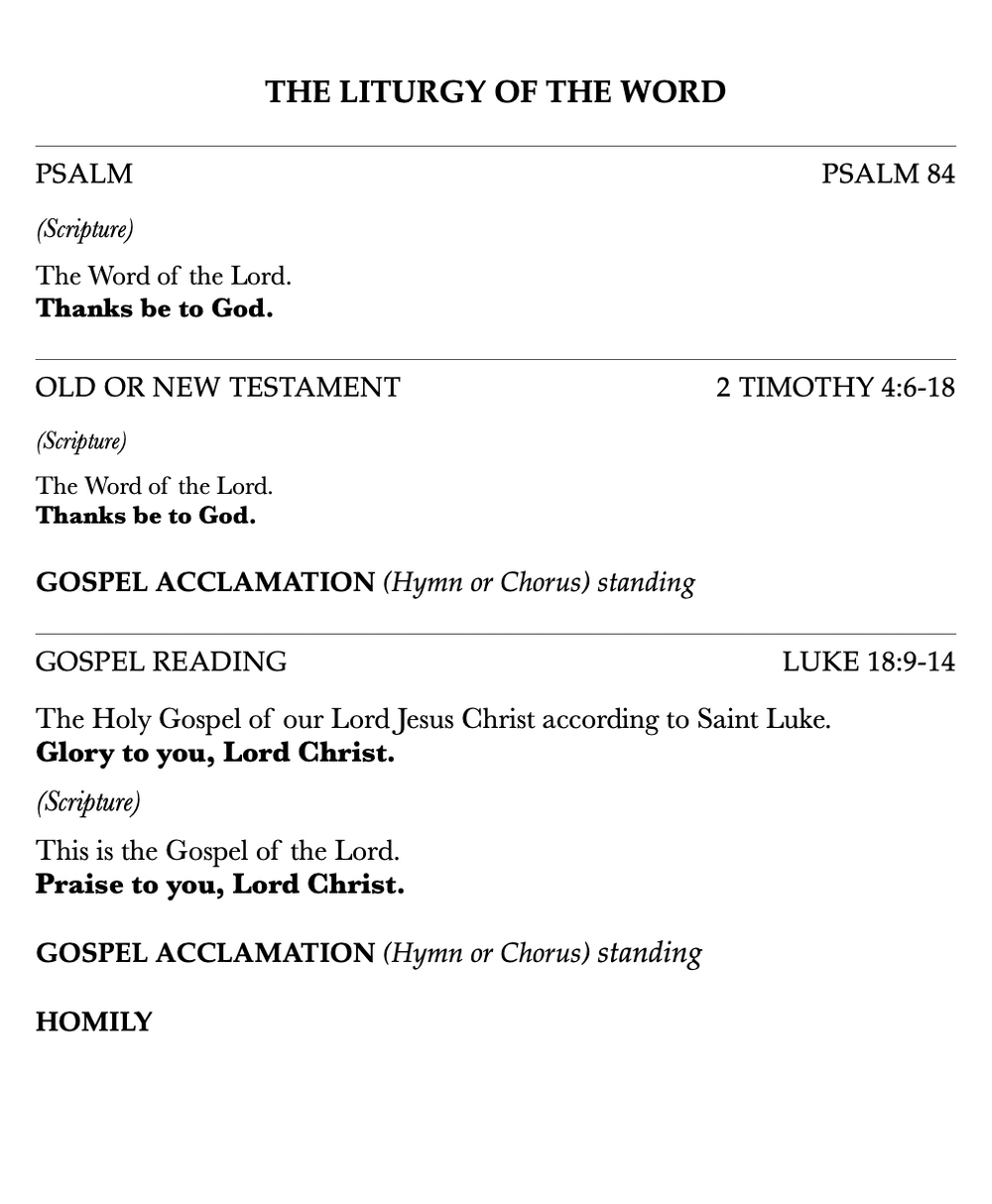
The Liturgy of the Word
Preparing for the Table through Scripture, Prayer, and Confession
The Liturgy of the Word is a time of listening and response. God speaks through Scripture, and we respond through creed, prayer, confession, and peace. When we arrive at the table, we have not merely heard information about God, we have encountered him through his Word, been shaped by prayer, and been reconciled to one another. We come to the table prepared..
Psalm, Old and/or New Testament
Scripture is read over us as we continue our journey. Normally a Psalm and either the Old or New Testament readings for the week. We replay to each Scripture with “Thanks be to God.”
You can find Daily Office Guides on our resource page.
Gospel
The Gospel is read from a Bible that sits on the altar with the communion elements, representing the presence of Christ at the table.
Before the reading, the Bible is carried into the middle of the people as a reminder that Jesus came and lived among us.
Homily
The homily, or sermon, is a time to reflect on what we have heard in the Scripture.
The Creed
Together, we recite the core tenets of our faith.
We usually recite the Apostles’ Creed or the Nicene Creed, and will add the Athanasian Creed from time to time.
You can find all three on the About page of our website.
The Prayers of the People
We join in prayer, lifting up the our voices to God.
We are led in a responsive prayer time, but also pause at different moments to add our own prayers, silently or aloud.
The Confession & Absolution of Sin
Before we come to the table, we follow Paul’s direction in 1 Corinthians 11 to examine ourselves for any sin in our lives
We have time to individually reflect and then pray together a prayer of confession.
The priest then reminds us that forgiveness is found in Jesus and that if we confess, He is faithful to forgive.
The Peace
Here we pause to pass the peace to each other. The common way to do so is the say “Peace be with you” and to reply “And also with you.”
This is more than just a time to introduce yourself and say hello (although we definitely do that as well). This is pronouncing that we are at peace with one another, obeying Jesus command in Matthew 5 concerning being reconciled to our bothers and sisters before coming to the alter.
Hover over image and click the > arrow to view each element.
Hover over image and click the > arrow to view each element.
The Liturgy of the Table
Remembering & Celebrating the Work of Christ
This is the culmination of our service – we respond to Jesus’ request to remember Him and His work in the breaking of bread and drinking of wine. This is, as we often recite, the gift of God for the people of God.
The Great Thanksgiving
The central prayer of the service, in which the priest gives thanks over the bread and wine.
The word “Eucharist” comes from the Greek for thanksgiving. This prayer traces its roots to the Jewish table blessings Jesus himself would have prayed at the Last Supper.
Sanctus
We join together to say or sing these words from Isaiah 6. Worshiping God as we come to the table of Christ.
Prayer of Institution
The priest prays over the bread and wine, recalling the night Jesus instituted this meal. The congregation responds with a declaration of faith.
Mystery of Faith
Together we proclaim the gospel – Christ died, was raised, is coming again.
Prayer of Consecration
The priest blesses the elements and the congregation
The Lord’s Prayer
The congregation prays together the prayer Jesus taught his disciples
Breaking of the Bread
The priest breaks the bread visibly, accompanied by words of invitation to the table.
Giving of Communion
Congregation comes forward to receive bread and wine. All Christians are welcome. If you’d prefer a blessing, simply cross your arms over your chest as you come forward. Juice and gluten free options are available upon request.
The Sending
After communion, we pray, receive a blessing from the priest, and are sent out to be the liturgy to our world